









A company's candidate records do not automatically transfer to another company
A company's candidate records do not automatically transfer to another company
Company A's candidate records cannot pass to company B without a lawful processing basis. This changes how job-connection programmes are designed.
Under compliance guidance for the Personal Data Protection Law 2025, an applicant's records held by company A cannot automatically transfer to company B without a lawful processing basis. For job-connection programmes, careers fairs and shared multi-employer assessment models, this is a condition to handle in the registration form itself rather than after results are out.
The prevailing model and where it runs into difficulty
A great deal of recruitment activity today is designed around one organisation collecting candidate records and then passing them to multiple employers. University careers fairs, connection programmes run by industry associations, shared aptitude assessment platforms, and even simple cases such as one company passing surplus records to a sister company within the same group.
The reasoning behind these models is economically sound. Candidates have already put in the effort to prepare a record and sit an assessment once, that result can serve several opportunities, and employers gain access to a pre-screened candidate pool without paying attraction costs again.
The difficulty is that the economic value of the model does not create a legal basis for transferring the data. That basis has to be established at the moment the candidate provides their information, with wording that states clearly who the data will be transferred to and for what purpose.
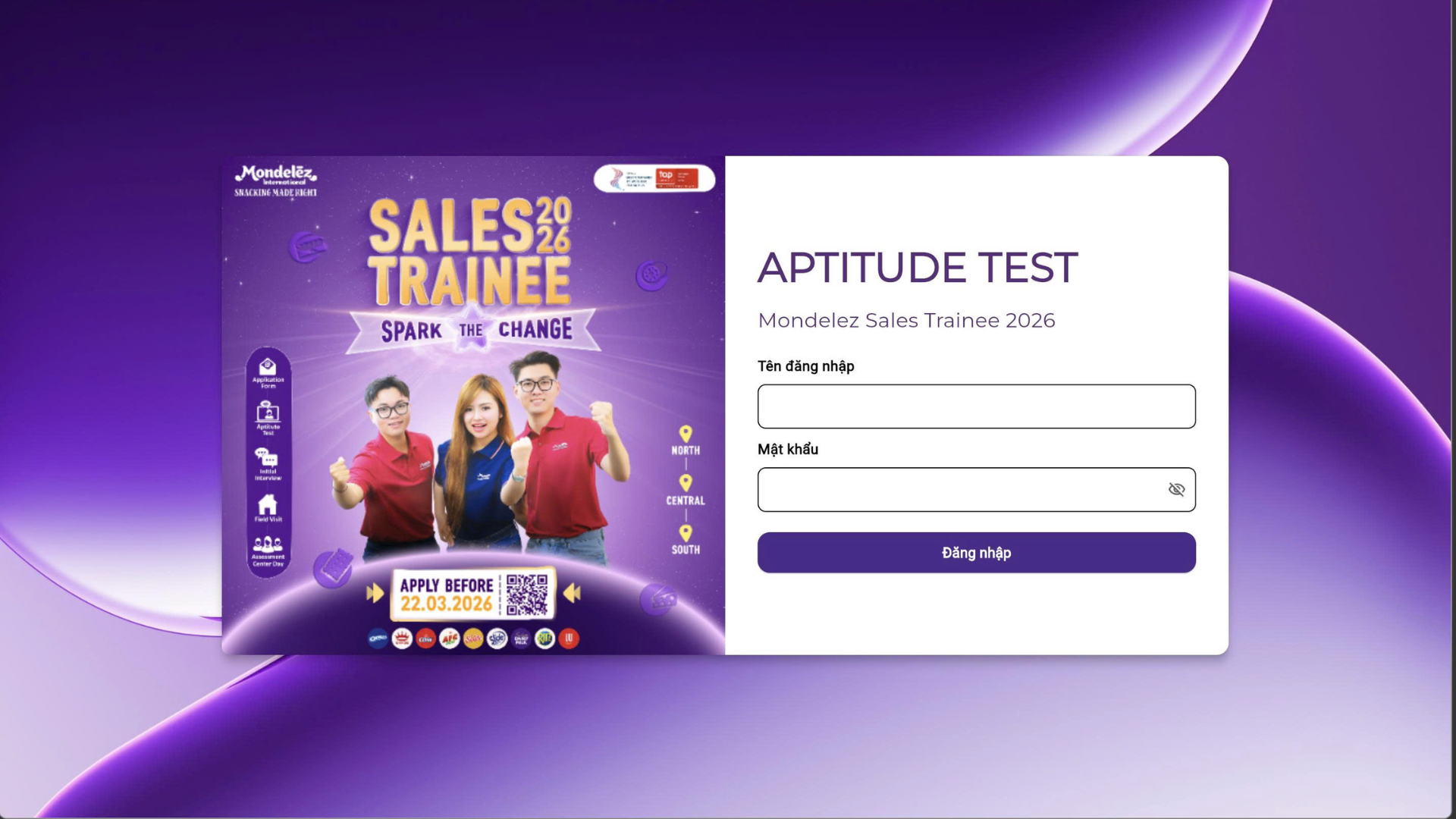
VCO Group operates application intake and assessment systems for a number of programmes with exactly this shared structure, so most of what follows comes from the process of reviewing forms and consent flows before a programme opens.
Three common situations and the level of risk in each
The three situations below look alike operationally but differ markedly in the level of preparation required.
Three candidate data transfer situations and their conditions
| Situation | What is usually missed | What to prepare in advance |
|---|---|---|
| Transferring records to a sister company in the same group | Being in the same group does not automatically create a basis for transfer, because these are still two separate legal entities | State clearly in the consent wording that data may be transferred to group companies, together with a list or a defining criterion. |
| A connection programme run by a third party | The candidate consents to the organiser, which does not imply consent to each participating employer | Structure consent by receiving employer, so the candidate chooses where their record is sent. |
| A shared multi-employer assessment platform | Assessment results are personal data, and reusing them for a different employer is a new purpose | Split consent for reuse of assessment results into a separate item, independent of consent to join the original programme. |
What all three share is that the consent wording must identify who will receive the data and for what purpose. Generic wording along the lines of permitting sharing with partners does not meet this requirement.
Why asking again after results are out does not solve the problem
The option that comes to mind first is to wait until results are known and only then contact the candidate for permission to transfer their record. This sounds safer, because the candidate knows the specific opportunity before deciding.
There are two problems with it. First, the act of making contact to ask is itself a data processing activity, so it too requires a valid basis established beforehand. Second, operationally, the response rate to a permission request sent by email after a candidate has received an unsuccessful outcome is usually very low, and most of the highest-value records are lost.
The more effective approach is to ask at the point where the candidate's motivation is highest, which is while they are filling in the form to join the programme. At that moment, a tick box stating clearly that the record may be introduced to other employers in the programme usually attracts a high consent rate, because candidates see it as a benefit rather than a demand.
One accompanying condition is worth noting: this consent must be optional, it cannot be made a condition of submitting an application, and the candidate has the right to withdraw it at any time. On withdrawal, the employer must delete or anonymise the corresponding data.
A consent structure for a multi-employer connection programme
The structure below is the way these programmes are commonly organised when several employers take part. It separates each purpose clearly and keeps the choice with the candidate.
Four consent layers for an assessment and job-connection programme
| Consent layer | Content | Nature |
|---|---|---|
| Participation in the programme | Processing records and assessment results to run the current programme | Mandatory, since without it the programme cannot be delivered. |
| Introduction to participating employers | Sending records and assessment results to the employers the candidate selects from the list | Optional, with candidates ticking by individual employer or by sector group. |
| Retention for future rounds | Keeping records and results in order to invite the candidate to later rounds or programmes | Optional, with the retention period stated clearly. |
| Aggregate analysis | Using data in aggregated, non-identifying form to analyse market trends | Optional, with a clear statement that the data is processed in non-identifying form. |
These four layers should appear as four separate boxes in the form, with a record kept of when the candidate consented and to what, so that it can be evidenced later.
There is a benefit beyond compliance worth noting. The proportion of candidates who actively opt in to being introduced to a given employer is a measure of that employer brand's appeal, obtained free of charge within the form itself and comparable across the employers taking part in the same programme.
Placing this in a regional context
This tightening is not unique to Vietnam, and for multinationals operating here, setting the two regulatory frameworks side by side usually makes the conversation with regional legal move faster.
The European Union's Artificial Intelligence Act classifies systems used for recruitment, screening and ranking candidates as high risk, with obligations covering data governance, documentation and human oversight. Notably, that framework draws a clear distinction between the party developing the system and the party deploying it, and both share responsibility.
This means that in a multi-employer connection model, both the organiser and each employer receiving data carry their own share of responsibility, and this allocation of responsibility should sit in the contract between the parties rather than being left to default.
For programmes being designed for the 2027 recruitment season, this is an item to bring in at the stage of agreeing terms with participating employers, because adding a data processing annex after a programme is already running usually takes far longer than including it from the outset.
Three things to do
- Split consent in the form into separate layers by purpose, with the introduction of records to other employers as an optional box that can be ticked employer by employer.
- Collect consent at the point the candidate fills in the form rather than asking again after results, because the later response rate is very low and the act of making contact itself requires a valid basis.
- Bring a data processing and responsibility allocation annex between the organiser and each participating employer into the agreement from the programme design stage.
Frequently asked questions
Can candidate records be transferred to another company?
Under compliance guidance for the Personal Data Protection Law 2025, an applicant's records held by company A cannot automatically transfer to company B without a lawful processing basis. That basis must be established at the moment the candidate provides their information, with wording that states clearly who the data will be transferred to and for what purpose.
Does transferring records to a sister company in the same group need separate consent?
Being in the same group does not automatically create a basis for transfer, because these are still two separate legal entities. The consent wording needs to state clearly that data may be transferred to group companies, together with a list or a criterion identifying those companies.
When should consent to transfer records be obtained?
At the point the candidate fills in the participation form, when their motivation is highest and when being introduced to several employers is seen as a benefit. Asking again after a candidate has received an unsuccessful outcome usually produces a very low response rate, and the act of making that contact also requires a valid basis.
Note
This article provides reference information to support operational review. It is not legal advice and does not replace legal advice for any individual company's circumstances. VCO Group is not a law practice. Companies should refer directly to the relevant legislation and consult their legal function or a legal adviser before applying anything set out here.
About VCO Group
VCO Group operates the assessment infrastructure behind Young Talent Programmes and Management Trainee schemes in Vietnam, covering application intake, aptitude testing, automated interviewing and Assessment Centres. VCO Group serves young talent and candidates with under three years of experience, working with large enterprises and multinationals in Vietnam. Its assessment and candidate management platform is called Testalents. Head office in Ho Chi Minh City.
If you would like to benchmark your own selection data against the market, or discuss the Young Talent Program Insight Report, contact Mr. Dung on 0334 889 068 or visit vcogroup.com.vn.
Chia sẻ bài viết:


Tin liên quan
17 Aug - 2026
How many applications does a Young Talent Program actually need?
VCO Group analysed 21,000+ Young Talent Program applications in Vietnam to answer how many applications you need to fill your interview round.
17 Aug - 2026
Four metrics that should replace total applications in your hiring report
Total applications is the easiest number to see but says nothing about which channel works. VCO Group proposes four replacements for early-careers hiring reports.
17 Aug - 2026
One attraction campaign can serve two different hiring needs
One in four Young Talent Program applicants already has work experience. VCO Group data shows how to split the funnel without adding attraction cost.
17 Aug - 2026
The ability gap within one university is nearly 8 times the gap between universities
VCO Group data from 21,000+ applications shows the ability gap between candidates at the same university is nearly 8 times the gap between universities.
17 Aug - 2026
A baseline for testing every CV rejection criterion
VCO Group proposes a quantitative baseline for testing any CV rejection criterion, by comparing it against rejecting applications at random.